
Research Field Vacuum- and Fusion technology
The reliable operation of a fusion power plant requires the safe processing of the fusion fuel in a closed circuit and the control of the fusion plasma in a vacuum chamber with the highest precision and robustness. The development of the processes, technologies and components required for this is an unprecedented and complex task.
To this end, the Vacuum and Fusion Technology research field is developing and simulating innovative, inventory-optimized fuel cycles for fusion reactors (tokamaks and stellerators). The cycle is considered holistically and all dependencies and the interface to the fusion plasma are taken into account. The central facility for this is the DIPAK research infrastructure, which is currently being set up.
Furthermore, technologies and components for the purification and processing of the exhaust gas from a fusion power plant, which consists of unburned hydrogen isotopes, noble gases and impurities, are being developed in this research field. This includes the development and implementation of a new concept for separating the hydrogen in ultra-pure form, the development of new vacuum pumps with liquid metals as operating media and improved concepts for separating the individual hydrogen isotopes from a mixture. In addition, new calculation codes are being developed that allow dilute gas flows to be calculated self-consistently in the entire Knudsen number range, i.e. from a continuous flow to a free molecular flow.
In vacuum technology, the ITEP maintains an internationally unique infrastructure, from small systems for measuring material outgassing in a vacuum to DIPAK, and has in-depth expertise in many areas beyond fusion, such as particle accelerators, neutron sources and large scientific instruments.
The research work is divided into the following key topics:
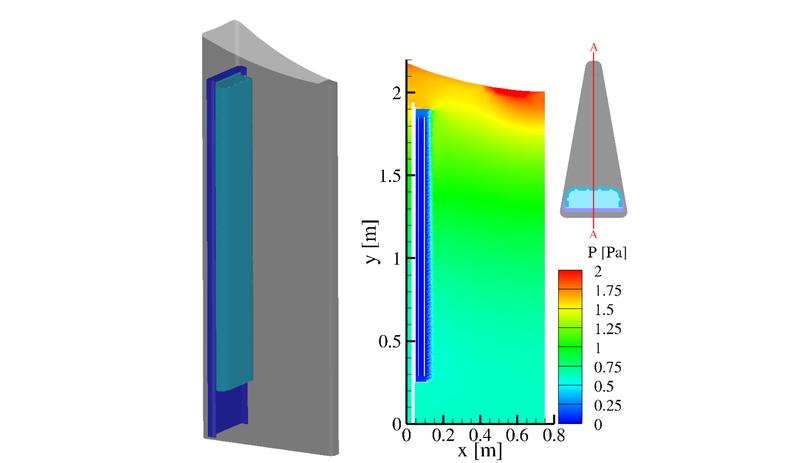
Simulation of single- and multi gas mixtures at large Knudsen numbers and simulation & modelling of processes and gas flows in the fusion fuel cycle.
Continue here
Development of tailor-made, special purpose fuel cycle components and processes for the fusion fuel cycle.
Continue here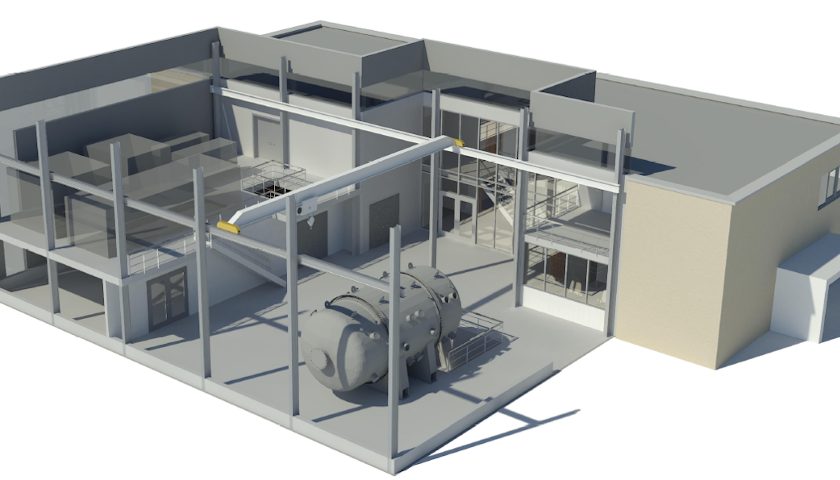
Establishment, operation, and scientific utilization of the DIPAK fuel cycle development platform, as well as the execution of industrial contracts related to vacuum technology and the fusion fuel cycle.
Continue here