
Real Time Systems for Energy Technologies
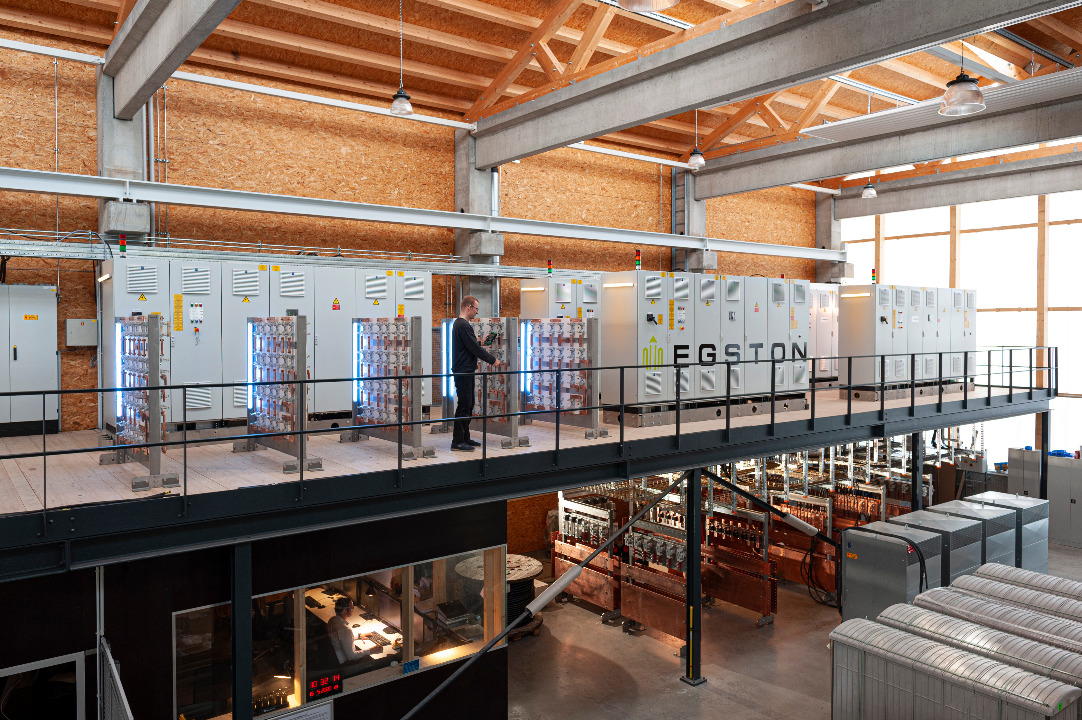
With an output of 1 MVA, the "Power Hardware in the Loop" (PHIL) laboratory is the most powerful research facility and a central component of the infrastructure of the "Smart Energy System Simulation and Control Center" (SEnSSiCC), embedded in the project framework of the Energy Lab.
Our goal is to investigate the system integration and control of new types of equipment using real-time simulation technology in combination with real components.
We are focused on three research areas:
-
Power Hardware In the Loop (PHIL): We research the stability and accuracy of a PHIL system to perform stable and accurate evaluation of technologies under realistic conditions.
-
Energy storage systems: We investigate which grid services the storage systems can offer and which technology best suits to solve certain problems (e.g. primary frequency control).
-
Superconducting power devices: We model and test superconducting power components with regard to thermal, electrical and mechanical properties.
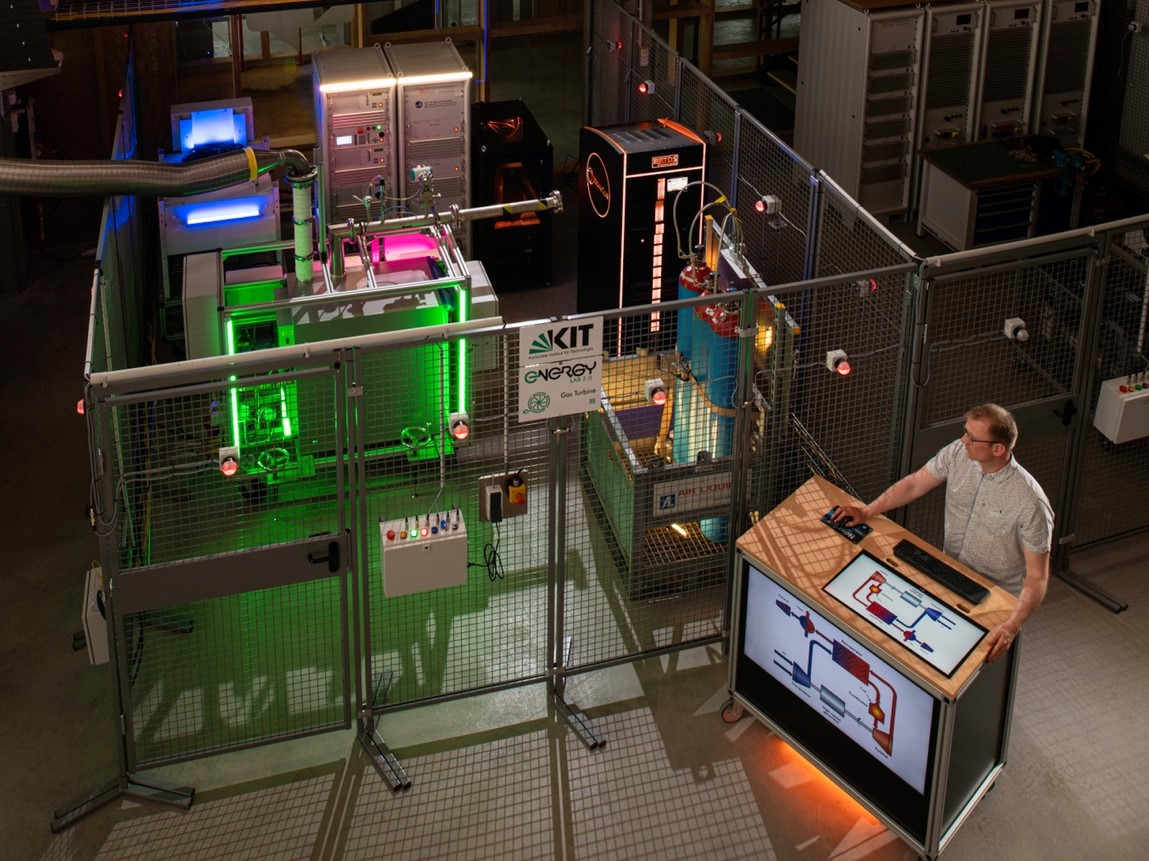



On June 18, 2026, we will hold a grand opening ceremony for the new Hydrogen Integration Platform (HIP) as part of the Energy Lab. This research infrastructure is designed to bridge the gap between laboratory-scale experiments and practical applications for various hydrogen technologies.
Learn more on our redesigned website about the subprojects—such as the high-performance hydrogen liquefier plant or realistic simulations for energy systems with hydrogen storage—as well as the latest research findings.

The IEEE Open Journal of Power Electronics (OJPEL) is a 100% open access journal that publishes high-quality, peer-reviewed articles on the development and application of power electronic systems and technologies.
Prof. De Carne has now been appointed as the new Co-Editor-in-Chief alongside Prof. Wenkang Huang from Infineon Technologies (USA).
Congratulations and good luck to further improve the quality of this important publication.
To the current PELS newsletter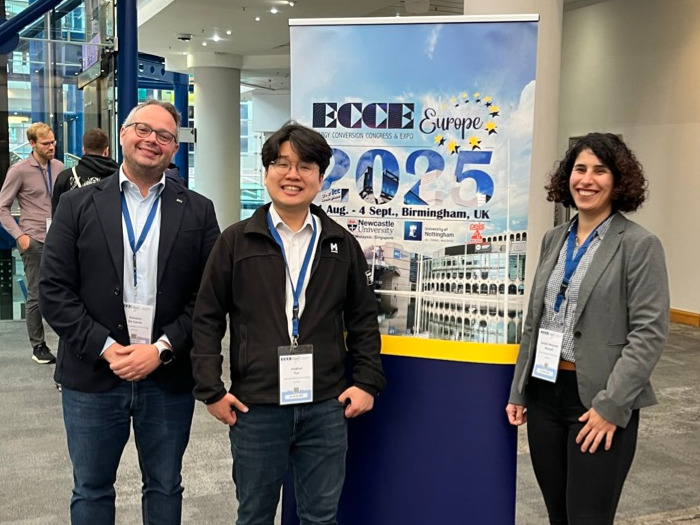
Jonghun Yun and Masoome Maroufi presented their research results at this year's ECCE Europe - Europe's largest conference for power electronics and energy conversion. The conference took place from August 31 to September 4 in Birmingham, UK.
Enhanced Active Thermal Balancing Strategy for Three-Phase Dual-Active Bridge Converter Suppressing Transformer Flux Saturation by Jonghun Yun
Power Management of Hybrid Flywheel-Battery Energy Storage Systems Considering the State of Charge and Power Ramp Rate by Seyede Masoome Maroufi
More about the conference